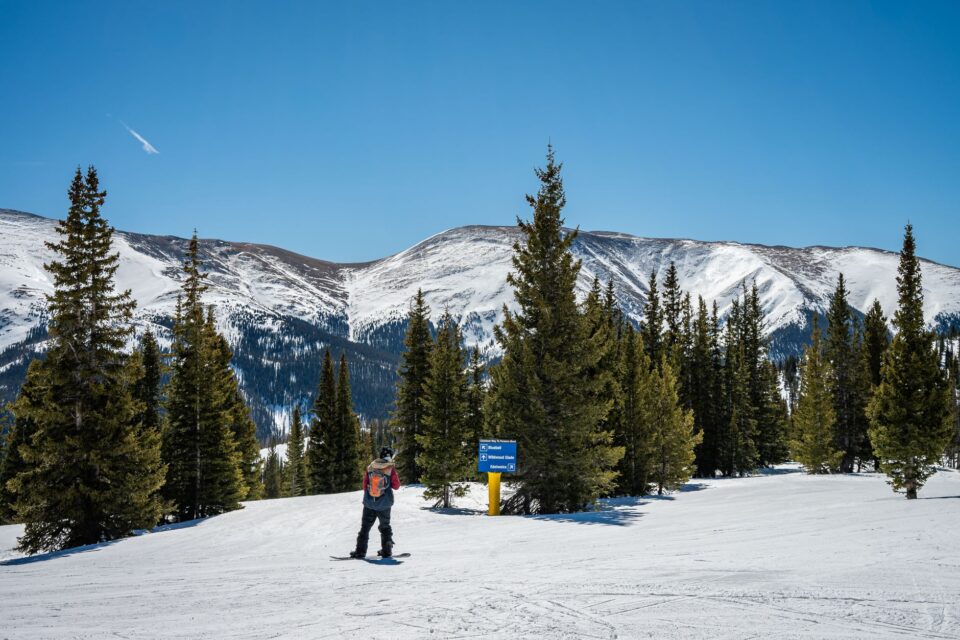
If you searched snowboarding terms, here’s a plain-English quick guide to the words you’ll actually hear on day one, plus a simple ruleset to decode frontside/backside and toeside/heelside. Start with the 25 must-know terms table below (with level tags, pronunciation, and common mix-ups) and you’ll follow instructors, park signs, and friends with confidence.
Use this as your pocket glossary before a lesson or while you’re in a lift line. Learn the basics first, then bookmark the direction cheat sheet for when frontside/backside shows up in turns, spins, and slides. Where you want step-by-step riding help, pair this with our beginner guides linked throughout.
Quick guide: 25 must-know snowboarding terms
Screenshot this table. It focuses on words you’ll hear on day one, with simple meanings, where they show up, and quick pronunciation hints. Level tags help you prioritize: Beginner, All, or Intermediate+.
| Term | Plain-English meaning | Where you’ll hear it | Level | Don’t confuse it with | Pronunciation |
|---|---|---|---|---|---|
| Regular | Left foot leads | Lesson, rental | Beginner | Goofy | REG-yuh-ler |
| Goofy | Right foot leads | Lesson, rental | Beginner | Regular | GOO-fee |
| Switch | Riding opposite foot forward | Park, lesson | All | Fakie | SWITCH |
| Fakie | Sliding backward, same stance | Park | Intermediate+ | Switch | FAY-kee |
| Toeside | Weight on toe edge | Lesson | Beginner | Frontside | TOH-side |
| Heelside | Weight on heel edge | Lesson | Beginner | Backside | HEEL-side |
| Edge | Metal strip along the board | Shop, lesson | All | Sidecut | EHJ |
| Carve | Clean turn on one edge | Lesson, groomers | All | Skid | KAHRV |
| Frontside (turn) | Turn facing downhill (toeside for regular) | Lesson | Beginner | Toeside | FRUNT-side |
| Backside (turn) | Turn with back to downhill (heelside for regular) | Lesson | Beginner | Heelside | BAK-side |
| Ollie | Pop off the tail | Lesson, park | All | Nollie | AH-lee |
| Nollie | Pop off the nose | Park | Intermediate+ | Ollie | NAH-lee |
| Butter/Press | Flatground nose/tail press | Park, flats | All | Ollie | BUH-ter / PRESS |
| Jib | Ride or slide on features | Park | All | Jump | JIB (rhymes with rib) |
| Boardslide | Board perpendicular across a rail/box | Park | Intermediate+ | Lipslide | BOARD-slide |
| Lipslide | Approach from far side, pop over rail | Park | Intermediate+ | Boardslide | LIP-slide |
| Indy (grab) | Back hand between bindings on toeside edge | Park, jumps | Intermediate+ | Mute | IN-dee |
| Melon (grab) | Front hand heel edge between bindings | Park, jumps | Intermediate+ | Stalefish | MEL-un |
| Stalefish (grab) | Back hand heel edge behind rear foot | Park, pipe | Intermediate+ | Melon | STAYL-fish |
| 180 / 360 | Half or full spin, named by degrees | Park, pipe | All | Turn | one-eighty / three-sixty |
| Pow / Powder | Soft, deep snow | Forecast, lift line | All | Slush | POW |
| Corduroy | Groomed ridges on a run | Morning, groomers | All | Crud | KOR-duh-roy |
| Crud | Chopped, uneven snow | All-mountain | All | Corduroy | KRUHD |
| Bluebird | Sunny, clear-sky day after snow | Forecast | All | Pow | BLOO-bird |
| Cat track | Flat connector trail | Signs, map | All | Traverse | CAT track |
| Steeze | Stylish ease in riding | Park slang | All | Speed | STEEZ |
Priority by scenario: First lesson — Regular/Goofy, Toeside/Heelside, Edge, Carve, Frontside/Backside (turns), Cat track, Corduroy, Crud. Park day — Ollie, Butter, Jib, Boardslide/Lipslide, Grabs (Indy, Melon, Stalefish), Spins 180/360, Steeze. Powder day — Pow, Bluebird, Traverse, Speed control with Toeside/Heelside, and keep cat tracks in mind.
Common mix-ups to watch: Frontside vs toeside (a turn direction vs your edge), Backside vs heelside, Switch vs fakie (one is stance, the other is sliding backward), and corduroy vs crud (groomed vs chopped).
Stance and directions explained: frontside, backside, toeside, heelside
Regular vs goofy: If your left foot naturally leads on a skateboard or when you slide on a hardwood floor, you’re likely regular; if your right foot leads, you’re probably goofy. Rentals can mark your board accordingly, and you can still ride both — this only sets your default forward.
Toeside vs heelside: These are your edges. Toeside means you’re tipping onto the edge under your toes; heelside means you’re on the edge under your heels. You will use both edges from your very first turns.
Frontside vs backside depends on context. The word changes meaning in three places — turns, spins, and slides. Use the quick rules below and you’ll decode most conversations fast.
| Context | Frontside means | Backside means | Quick check rule | Example |
|---|---|---|---|---|
| Turns | Chest faces downhill during the turn | Back faces downhill during the turn | Regular: frontside = toeside; goofy: frontside = heelside | Regular rider: a frontside carve is on the toeside edge |
| Spins (jumps/pipe) | Rotate so chest turns into the jump/feature first | Rotate so back turns into the jump/feature first | Think shoulders: leading shoulder faces into the spin | Frontside 180: regular rider spins counterclockwise off a left-side jump |
| Slides (rails/boxes) | Approach feature so your chest faces it | Approach from the far side so your back faces it | Which side of the feature did you pop from? | Backside boardslide: approach from the heelside, back faces the rail |
Most common confusions:
- Frontside does not always mean toeside. It does for turns (regular), but not for spins or slides.
- Spins are named by rotation direction relative to your body, not the edge you leave from.
- Slides care about how you approach the feature. Boardslide vs lipslide depends on which side you pop from.
What is considered goofy in snowboarding? Goofy means riding right foot forward by default. It’s just as normal as regular. Many pros ride goofy.
What are the basic moves in snowboarding? On day one: balancing, sideslipping on heelside and toeside, falling leaf (linking short sideslips), then skidded turns; later, add an ollie and a butter. For a structured start, see Snowboarding for Beginners: A Practical First-Day Guide and the fundamentals walkthrough in Snowboarding Fundamentals.
Board and gear terms you’ll hear in the shop
Parts of the board: Nose (front), tail (back), base (the bottom), edges (metal rails), sidecut (the curve between nose and tail), and waist width (the narrowest point). A deeper sidecut helps boards turn tighter; a wider waist can help riders with bigger feet avoid toe drag.
Bindings: Straps, highbacks, and forward lean. Straps secure boots; the highback supports your calves; forward lean tips the highback toward the toe edge for faster heelside response. Stance width is the distance between bindings; angles are how the bindings are rotated (for example, +15 front, 0 back). Setback means the stance sits closer to the tail for better float in pow.
Profiles and flex: Camber bows up underfoot and grips hardpack; rocker (reverse camber) bows down and feels loose and floaty; hybrids blend both. Flex ranges from soft (playful, great for butters) to stiff (stable at speed). If you’re choosing boots, don’t overlook fit and support — our complete boot fitting guide explains how snug should feel without hotspots.
Quiver: A set of different boards for different days — for example, an all-mountain daily driver, a soft park board, and a directional powder shape. Beginners do not need a quiver; one forgiving all-mountain board is perfect. If you’re mounting bindings, use this 10-minute setup walk-through: How to Attach Bindings to a Snowboard.
Tricks and park lingo (from ollie to stalefish)
Pop basics: The ollie is your first pop — compress, load the tail, and spring. The nollie pops off the nose. Flatground presses and butters teach board control and balance without leaving the snow.
Jumps and spins: Takeoff is where you leave the jump; landing is the downslope. Spins are named by degrees — 180, 360, 540, and so on — and by whether they’re frontside or backside (shoulder leading into the spin). Blind landings happen when you spin away from the landing and spot late; practice safe, small rotation first.
Grabs: Indy (back hand between the bindings on the toeside edge), melon (front hand heel edge between the bindings), stalefish (back hand heel edge behind the rear binding). What is a stalefish in snowboarding? It’s a grab where your back hand reaches behind your rear foot to the heel edge — stylish and stable in pipe and on jumps.
Rails and boxes: Jib means riding or sliding on man-made features. Start with a 50-50 (board straight along the feature), then try boardslides and lipslides. Approaches are named by the side and the direction you rotate onto the feature. If you want a deeper skills plan, browse our freestyle basics guide: Snowboard freestyle tricks: learn jumps and rail basics.
Snow, terrain, and conditions decoded
Snow feel: Powder is soft, dry, and deep; corduroy is fresh machine-groomed ridges; crud is chopped snow after traffic; slush is wet spring snow; boilerplate or ice is very firm, slick snow you’ll slide on more than into; bluebird means a sunny day after snowfall.
Terrain types: Groomers are maintained runs; tree runs flow through glades; bowls are wide, open basins; halfpipe is a U-shaped snow wall course; terrain park hosts jumps, rails, and boxes; sidecountry and backcountry lie outside ropes or resort boundaries and require avalanche knowledge and proper equipment.
Navigation terms: Fall line is the most direct line downhill that gravity would take; traverse means moving sideways across the slope; a cat track is a flat connector trail; a choke point narrows traffic. When someone says drop in, they mean start your line. Last chair is the final lift ride of the day.
When gear terms show up: You’ll hear swallowtail on deep days — a directional powder shape with a cut tail to help the nose float. Stiffer camber boards feel great carving on corduroy; rockered noses help crud-busting by keeping tips above the mess.
Etiquette, signs, and slang you’ll actually use
Right-of-way basics: The downhill rider has right of way. Look uphill before you start or merge. Control your speed in Slow Zones. Respect closures and ropes. Use clear calls like dropping when entering a jump line so others know your plan.
On-mountain signs and words checklist — what they mean at a glance:
- Slow Zone — High traffic area; keep your speed in check.
- Merge — Two trails combine; look uphill and yield.
- Closed — Trail or feature is not open; do not enter.
- Rope Drop — Patrol just opened a previously closed area.
- Boundary / Backcountry — Beyond resort control; hazards not managed.
- Cat Track — Flat connector; keep speed to avoid walking.
- Patrol / First Aid — Medical help; note the symbol and nearest hut.
Lift and lodge lingo: Liftie is a lift operator. Maze is the corral leading to the chair. Last chair is the final ride up. In a park, drop in means it’s your turn to start; make eye contact and say dropping so you don’t snake someone’s line.
Slang primer (use with care): Bombing means straight-lining too fast; yard sale is when gear flies everywhere after a fall; steeze blends style with ease; quiver means your collection of boards; Jerry or kook can be a rude dig at a clueless rider — better to help than label.
Snowboarding terms A–Z mini glossary (expand your vocab)
Quick hits beyond the day-one list, including pronunciation notes:
- Backcountry — Unpatrolled terrain outside resort ropes.
- Boilerplate — Very firm, icy snow.
- Butter — Flatground nose/tail press; playful control.
- Camel toe/catch edge — Nose dives or edge grabs the snow and throws you.
- Core shot — Deep base gouge into the core; needs a shop repair.
- Drop — Start your line or jump run-in; say dropping.
- Gnar — Gnarled, challenging terrain; good gnar is fun-challenging.
- Hot wax — Quick wax service to refresh glide.
- Kicker — Jump in the park.
- Lifty — Lift operator; also called liftie.
- Line — Your chosen path down a run or through features.
- Park rat — Rider who spends most of the day in the terrain park.
- Quiver — Multiple boards for different conditions.
- Rocker — Reverse camber; loose, floaty feel.
- Sidecut — Hourglass curve that helps you turn.
- Stomp pad — Grippy pad near rear binding for one-foot riding.
- Traverse — Move sideways across the hill.
- Wax — Hydrocarbon layer on the base for glide.
Still want more vocabulary with audio-style pronunciations and examples? Check our companion glossary with sentence examples: Snowboard term meanings: pronunciation, examples, and uses.
Frontside vs backside vs edges: recap for quick memory
Think edges for turns (toeside and heelside). Think shoulders for spins (frontside turns your chest into the spin). Think approach side for slides (backside usually means you hopped over from the heelside so your back faces the feature). If in doubt, ask your instructor to demo once while saying the words out loud — hearing it while seeing it cements the meaning.
What do people call snowboarders? Most riders simply say riders. If you’re meeting up, you can also say crew or homies, but keep it friendly and inclusive.
What does jib mean in snowboarding? It’s riding or sliding on non-snow features such as boxes, rails, logs, or walls. Start on wide, low boxes, keep flat base then gently set the edge for control, and build to rails later.
With these definitions, comparisons, and etiquette basics, you’ll speak the mountain’s language and ride safer, smoother, and with more steeze.