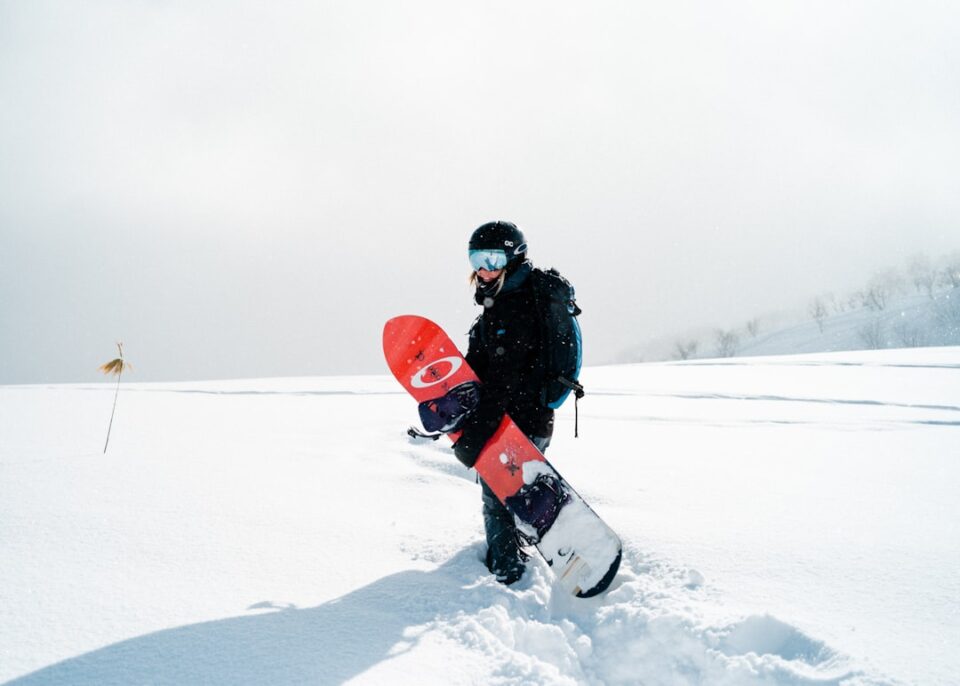
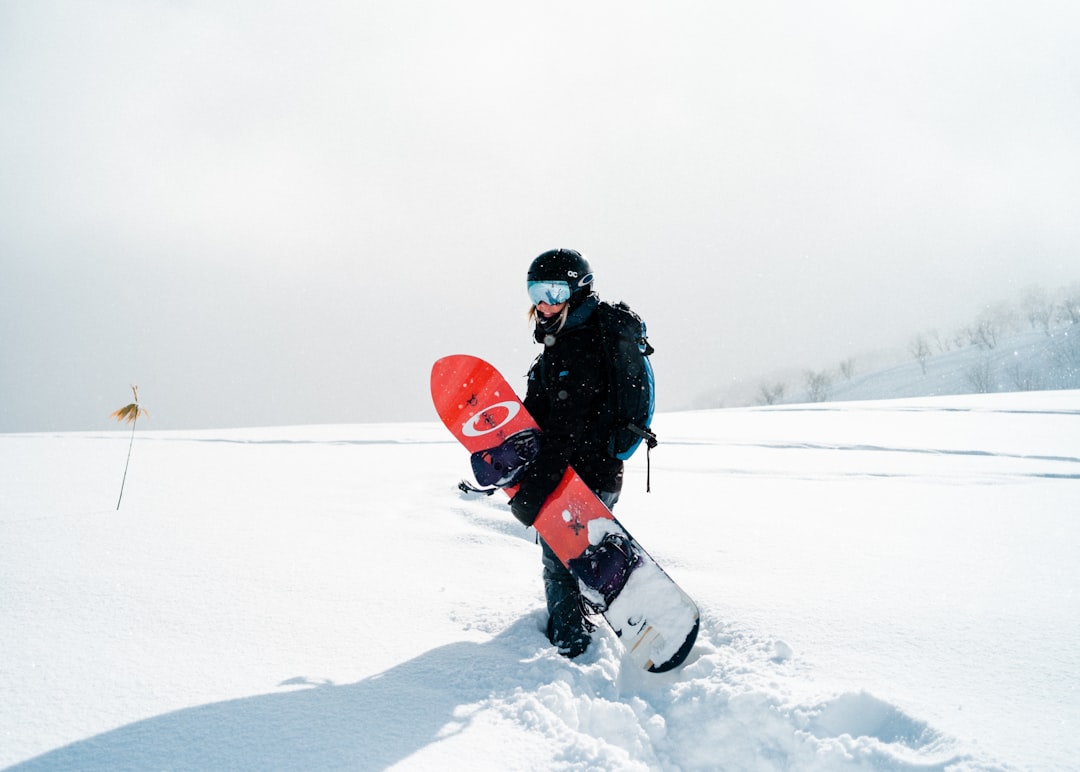
Snowboarding for Beginners gets easier when you stop chasing style on the first run and focus on the few basics that actually matter. The right board fit, a stable stance, and a calm first day on snow will teach you far more than trying to look polished before you can stop comfortably. If you start with that mindset, the sport feels less like a mystery and more like a set of small, learnable habits.
This guide is built for real first days, not fantasy ones. I am assuming you want practical answers about what to rent, what to wear, how to stand, how to fall less awkwardly, and how to leave the mountain with enough energy to come back. I am also assuming you want a plan that makes sense whether you are riding at a resort for the first time, borrowing gear from a friend, or trying to decide if buying your own setup is worth it. If you want more gear and technique breakdowns later, the snowboarding category keeps related guides in one place.
Snowboarding for Beginners: what to know before the lift line
The first mistake many new riders make is treating day one like a performance test. It is not. Your job is not to impress anyone. Your job is to keep the board pointed in a direction you understand, stay relaxed enough to learn, and avoid loading your brain with ten new tasks at once. That means the best first-day goals are simple ones: stay comfortable in your boots, learn how to get up after a fall without wasting energy, and understand how the board reacts when you move your weight.
Before you even click into bindings, spend time on three things. First, fit. Boots that are too loose make the board feel vague, and boots that are too tight turn every turn into a complaint. Second, slope choice. A small, gentle learning area is better than a steep blue run, even if the steeper trail looks more interesting from the chairlift. Third, patience. Snowboarding rewards people who accept awkwardness for a while. Your first hour may look clumsy. That is normal. Clumsy is how the sport teaches you where your balance actually lives.
It also helps to know what not to worry about yet. Do not obsess over tricks. Do not compare your speed with skiers who have been doing this for years. Do not try to ride faster just because you feel slow. Early progress usually comes from control, not pace. Once control starts to feel natural, speed can follow. If you reverse that order, you often end up tense, tired, and confused about why the board seems to fight you.
Choose the right board, boots, and bindings
Gear does not make someone good, but bad gear can make learning feel much harder than it needs to be. For beginners, the most useful question is not whether a board looks cool. It is whether the setup matches your body, your boot size, and the kind of riding you want to do. A softer board is usually easier to start with because it bends more willingly and forgives imperfect movements. A very stiff board can feel precise, but precision is not what most new riders need on day one.
Board length matters too. A longer board can feel more stable at speed, while a shorter board is easier to turn and move around on gentle terrain. For a new rider, stability matters only up to a point. If the board is so long that it feels stubborn every time you try to turn, that is not helping you learn. The right length is the one that lets you control the board without feeling like you are wrestling a stubborn plank.
Boots deserve more attention than many first-timers give them. Your feet tell the rest of your body what the snow is doing. If your toes go numb, if your heel lifts, or if your ankle feels unsupported, the feedback gets messy. Try boots on with the socks you will actually wear. Walk in them. Flex forward. Stand still for a minute. The fit should feel snug, not crushed. Bindings should hold the boot securely without creating painful pressure points. If you rent, ask to recheck the fit after the first few minutes, because a small adjustment can change everything.
Here is a useful comparison when you are deciding between renting and buying. Renting is better when you are not sure how often you will ride, when you still need to learn what size and flex feel right, or when you want to try different setups before committing. Buying makes sense once you know the sport is going to be part of your winter routine and you have a clearer idea of the board shape, boot fit, and binding angles you prefer. A first setup does not need to be fancy. It needs to be consistent.
- Choose a softer board if you want easier learning.
- Choose a comfortable boot before you think about graphics.
- Make sure the bindings keep your heel planted.
- Ask for help with stance width and binding angles at the shop.
- Do not buy gear only because a friend swears by it.
When in doubt, ask the shop tech to explain why a board or boot is a match for your height, weight, and boot size. Good shops can describe the tradeoffs clearly. They will talk about flex, length, and edge hold instead of tossing out vague praise. That is the kind of advice worth listening to.
Find your stance and learn to move sideways
One of the strange parts of snowboarding is that you ride sideways, but you still need your body to feel balanced and direct. The first question is stance. Some riders are more comfortable with the left foot forward. Others prefer the right. People call those regular and goofy, but the labels matter less than the feeling. A simple way to test it is to have someone give you a light push from behind while you stand relaxed. The foot you step forward with often becomes your lead foot. It is not a perfect test, but it is a useful clue.
Once you know your stance, spend time on flat ground. That sounds boring, and it is, but boring is useful. Practice skating with one foot out of the binding while the other stays strapped in. Practice gliding a few feet and stopping. Practice stepping onto the board, standing up, and shifting from toe edge to heel edge while holding onto something stable. These little motions matter because they teach your body how to stay quiet while the board does the work underneath you. A tense upper body usually makes the lower body clumsy. Relaxed shoulders help more than most people expect.
Binding angle is another small thing that can have a big effect. A beginner does not need an elaborate setup. A mild duck stance often feels easy because it allows both knees to point in more natural directions, especially when you are still learning how to steer. But comfort should decide the final setup, not internet arguments. If your knees twist, your stance is probably wrong for your body. If you can stand balanced without feeling like you are twisting from the hips, you are closer.
Think of the first day as learning how to transfer weight rather than learning how to carve. Snowboarding responds to pressure changes. A little more pressure on the heel side changes the board differently than a little more pressure on the toe side. Once that idea starts to make sense in your body, the sport stops feeling like random sliding and starts feeling like a conversation. You do something small, the board answers, and you adjust.
The first hour on snow should be boring on purpose
New riders often imagine that the first real moment on snow will be dramatic. In reality, the best first hour is usually slow, repetitive, and a little funny. Start by getting comfortable with standing still, moving a few feet, and stopping before things get out of hand. If you have never been on a board before, your first goal is to stop seeing every small wobble as a problem. Wobble is information. It tells you where your weight went.
Falling is part of this hour too. You are going to fall. That is not a sign that you are failing. It is a sign that the board is teaching you something. The trick is to fall in ways that waste less energy. Keep your arms close instead of flinging them out. Try to let your hips and knees absorb the landing. When you get up, turn the board so it sits across the slope, plant your hands on the snow, and push yourself up with a steady motion instead of a frantic one. Getting up calmly matters because every wasted motion steals from the next attempt.
Stopping is the first skill that gives you real confidence. Most beginners learn to stop on a heel edge before they get comfortable on a toe edge. That makes sense because it feels more visible and a little more stable at first. To stop on your heel edge, roll your ankles and knees gently so the board tilts away from the snow on the toe side. To stop on your toe edge, press the shins into the front of the boots and bring the knees forward until the board bites. Neither movement should be rushed. Small changes make a bigger difference than you think.
If you are riding with a friend, do not let the friend turn the hour into a speed contest. Take turns moving down the slope, then stopping, then resetting. Repetition creates a better learning loop than one long, shaky descent. The mountain is full of people who look like they are doing more because they are moving faster. That does not mean they are learning more.
- Keep your arms quiet and near your body.
- Use small edge changes, not dramatic twists.
- Practice standing up on both sides.
- Pause after each short glide to reset your balance.
- Choose the easiest slope you can find.
By the end of that hour, you want a basic sense of what the board does when you lean. That is enough. You do not need elegance yet.
Turning is just controlled falling
People often talk about turning as if it requires some hidden athletic gift. It does not. Turning is controlled movement toward one edge, then a careful shift toward the other edge. Once you stop treating it like a mystery, it becomes a series of simple experiments. The board is not asking you to jump through hoops. It is asking you to change pressure in a way the snow can read.
The most useful beginner turn is often the J-turn. Start by gliding straight for a short distance, then gradually steer the board across the slope until you slow down and stop. If you repeat that on both sides, you begin to feel how one edge supports a gentle change of direction while the board still moves forward. That is a far better starting point than trying to force a full linked turn before you can feel the difference between edges.
When you move on to linking turns, think less about twisting your shoulders and more about where the pressure sits under your feet. Many new riders try to steer by flinging their upper body around. That usually creates a mess. The board responds better when your head, chest, and hips stay relatively quiet while your ankles, knees, and feet do the steering work. Your upper body should feel like it is following a plan instead of inventing one.
There is also a timing issue. Beginners often rush the transition between one turn and the next. They start the next movement before the board has finished the first one. That leaves them in a strange middle position where balance gets vague. Give each turn a clean beginning, middle, and finish. Feel the edge hold for a moment. Then move to the other edge. A clean sequence is easier to learn than a fast one.
If you ever feel stuck, return to garlands on a gentle slope. Garlands are half-turns that help you feel the board changing direction without committing to a full link. They are useful because they build edge control without the pressure of riding a long continuous line. The humble practice run often teaches more than the bold one.
How to read a slope before it reads you
A mountain is not just a blank surface. It has traffic patterns, surface changes, hidden rolls, and places where crowds gather for no reason other than convenience. New riders who learn to read terrain early tend to feel safer and calmer because they spend less time surprised. Before you drop in, look at the trail map. Check the color coding. Notice where the easiest green trails connect to lifts and where the steeper sections begin. A little map awareness saves a lot of confusion later.
Weather and surface conditions matter just as much. Fresh snow feels different from packed groomers. Late-afternoon snow can feel scraped and uneven. A cold morning may give you crisp, predictable edges, while a warm afternoon can make the board feel slower and heavier. None of these conditions are bad. They are just different. The better you understand them, the less you blame yourself for a feeling that actually came from the snow.
Watch other riders too, but watch them for lines, not for ego. Notice where beginners naturally slow down. Notice where people stop to regroup. Notice where the slope flattens and where it narrows. If you are unsure about a section, it is smarter to pause and look than to keep moving just because momentum feels socially easier. Some of the best decisions on the mountain are the unglamorous ones. Standing still for ten seconds can reveal a lot.
Resist the urge to graduate too quickly to terrain that is clearly above your current comfort level. A green trail that lets you practice clean turns is worth more than a blue trail that turns your legs into a panic response. Progress on the right slope often looks slower from a distance. Up close, it is more honest. You are building a base that can hold the sport later.
When you start feeling more confident, pay attention to how the slope changes from top to bottom. Some runs begin gently and then tilt more steeply near the bottom. Others hide small banks or runouts that change the rhythm. If you learn to scan ahead, your riding feels less reactive. That is a big shift. Once you can read what is coming, your body can prepare before the board has to recover.
Layering, gloves, and comfort matter more than style
There is a temptation to treat outerwear like a fashion problem. Snowboarding gear is not about impressing anyone in the lift line. It is about staying warm, dry, and mobile long enough to keep learning. The easiest way to make a cold day miserable is to wear clothes that trap sweat, allow wind to cut through, or restrict movement in the wrong places. Comfortable gear keeps your attention on the board instead of on your fingers.
Layering is the simplest system that works. Start with a base layer that moves moisture away from the skin. Add a middle layer if the day is cold enough to need it. Finish with a shell or jacket that blocks wind and snow. The exact fabrics matter less than the logic. Wet cotton against skin is usually a bad idea because it stays damp and steals warmth. Wool or technical fabrics perform better because they stay useful even when conditions change through the day.
Socks deserve a special mention because too many first-timers solve a cold-feet problem the wrong way. Wearing extra-thick socks usually makes boots fit worse and does not necessarily make feet warmer. A single well-fitting snow sock is usually better than two bulky ones. The boot should hold the foot securely without crushing circulation. Gloves should be easy to open, warm enough for the conditions, and not so bulky that they make buckle adjustments annoying. Goggles should fit your helmet or beanie without leaving a gap that invites cold air.
Small comfort details add up. A neck gaiter can make windy chairlift rides feel more manageable. Hand warmers can help on exceptionally cold days, though they are not a substitute for good gloves. A small snack in a pocket can keep your energy from crashing between runs. If you are overheating, unzip a layer before you sweat too much. If you are shivering on the lift, add insulation before the next run. Comfort is not a luxury. It is part of staying capable.
- Wear moisture-wicking layers near the skin.
- Choose one good pair of socks, not two bulky ones.
- Keep gloves dry and easy to adjust.
- Make sure goggles match your helmet or hat.
- Carry a small snack and water if you will ride for several hours.
The riders who stay comfortable usually stay more focused. That alone makes them learn faster.
Common mistakes that slow progress
Almost every beginner makes the same few mistakes, and most of them are fixable once they are named. One classic mistake is looking down at the board instead of looking where you want to go. The board follows body cues, and your body tends to follow your eyes. If you stare at your boots, your posture tightens and your steering gets muddy. Look ahead far enough to give your body a direction.
Another common issue is leaning too far back. People do this because it feels safer. The board then loses clean contact with the snow, which makes steering harder, not easier. A balanced stance with slight ankle and knee flex is usually better. You do not need to be aggressive. You just need to stay centered enough that both edges can work when asked. If the back leg feels like it is carrying all the work, the stance probably needs adjustment.
Rushing to harder terrain is another way progress gets interrupted. Some beginners think a steeper run will force improvement. What it usually forces is panic. A calmer rider on easier terrain learns more efficiently than a tense rider on terrain that is above the current skill level. You can always move up later. It is much harder to unlearn habits built while you were just trying to survive each run.
Fatigue is the mistake nobody wants to call a mistake. By midday, beginners often get tired, then sloppy, then frustrated, and finally convinced they are bad at the sport. Usually they are just tired. That is different. Take short breaks. Drink water. Eat something. Sit down before your legs start making decisions on their own. Learning while exhausted teaches the wrong lessons because the body begins to compensate in ways that are hard to fix later.
There is also a social mistake: copying someone else’s pace, style, or stance without checking whether it fits your body. A friend may ride with more speed, a different binding angle, or a more aggressive way of entering turns. That does not make it right for you. Match the variables that match your body. Leave the rest. Snowboarding gets better when your setup reflects your own balance instead of someone else’s confidence.
If you notice the same mistake repeating, narrow the problem down. One session might be dedicated only to stopping. Another to gliding across a gentle slope. Another to linked turns. Simple focus beats scattered effort every time.
Keep the board predictable with simple maintenance
A well-kept board feels friendlier underfoot. That does not mean it needs constant attention, but it does mean you should know the basic maintenance habits that keep it predictable. Wax, edges, base condition, and binding hardware all play a part. When one of those pieces goes ignored, the board can start behaving in ways that feel like bad technique when the real issue is equipment upkeep.
Wax helps the base slide more smoothly across snow. If the board feels sticky, especially in certain snow temperatures, a fresh wax can make a noticeable difference. A beginner does not need to become a tuning expert overnight, but learning what wax does helps you notice when the board is dragging because it needs care. Edges matter too. If they are dull, turns feel less secure, especially on firmer snow. If they are nicked or rusty, the board may lose some of the neat, clean response you want while learning.
Bindings should get a quick screw check before the season and again whenever something feels loose. Snowboard hardware can shift a little with use, and a screw that slowly backs out is an annoyance you can usually avoid with a basic inspection. Base scratches are normal. Small marks are not panic-worthy. Deep gouges deserve shop attention, especially if they start exposing core material or affect how the board slides.
For most riders, a simple rhythm works well. Wipe the board after wet days. Store it somewhere dry. Check the screws. Rewax when it starts feeling dry or slow. If you hit a rock, inspect the base and edge before the next trip. This is not glamorous work, but predictable equipment makes learning easier because it removes guesswork. You want the board to behave the same way from run to run while your body is still learning the rest.
Some riders do most tune-up work at home. Others prefer a shop tune before the season and a midseason refresh if they ride often. Both approaches are fine. The real question is whether the board still feels honest under your feet. If it starts feeling vague, sluggish, or inconsistent, maintenance should be part of the conversation.
Build a realistic first-season plan and know when to get help
A good first season is not measured by how fast you progress in one day. It is measured by whether you come back with enough confidence to keep going. That means your plan should be realistic. On day one, aim for balance and stopping. On day two, aim for cleaner glides and a few more controlled turns. By the end of the first few outings, aim for consistency on easy trails before you chase speed or harder terrain. Progress that feels calm is usually more durable than progress that happens in a panic.
It also helps to separate what you can learn alone from what becomes easier with instruction. Plenty of riders learn a lot by practicing on their own, but a single lesson can save hours of trial and error if you are stuck on stance, edge control, or turn timing. A good instructor does not just bark commands. They watch patterns you cannot see yet and give you corrections that fit your body. That can speed up the whole learning process without turning the sport into homework.
When I think about a practical first season, I think in layers. The first layer is comfort with equipment. The second is basic movement on gentle terrain. The third is turning with control. The fourth is reading terrain without surprise. The fifth is riding long enough to stay relaxed. If any layer is shaky, it makes sense to return there before moving on. That is not failure. That is how the sport stays fun instead of becoming a chore.
Keep notes in your head or on your phone after each outing. What felt easier? What still felt awkward? Was the problem stance, fatigue, snow type, or speed? These small reflections help you spot patterns. They also stop you from treating every rough run as a personal flaw. Sometimes the day was just windy, icy, crowded, or too long. Sometimes your boots needed adjustment. Sometimes you were simply one run away from getting it.
The best first-season mindset is practical and patient. Learn one thing, repeat it, and let the mountain teach the rest. Snowboarding rewards people who stay curious, keep their setup simple, and accept that control comes before style. If you do that, the learning curve feels less like a wall and more like a slope you can actually climb.
Snowboarding for Beginners becomes a lot more enjoyable once the basics stop feeling like obstacles and start feeling like the structure of the sport. Get the fit right, keep your attention on balance, and let each clean run teach the next one.